

Everyday free shipping in Canada on orders over $99
We currently ship across Quebec and Ontario, Canada. We plan on expanding our shipping Canada-wide in the near future. Orders will be shipped via Canada Post unless otherwise noted.
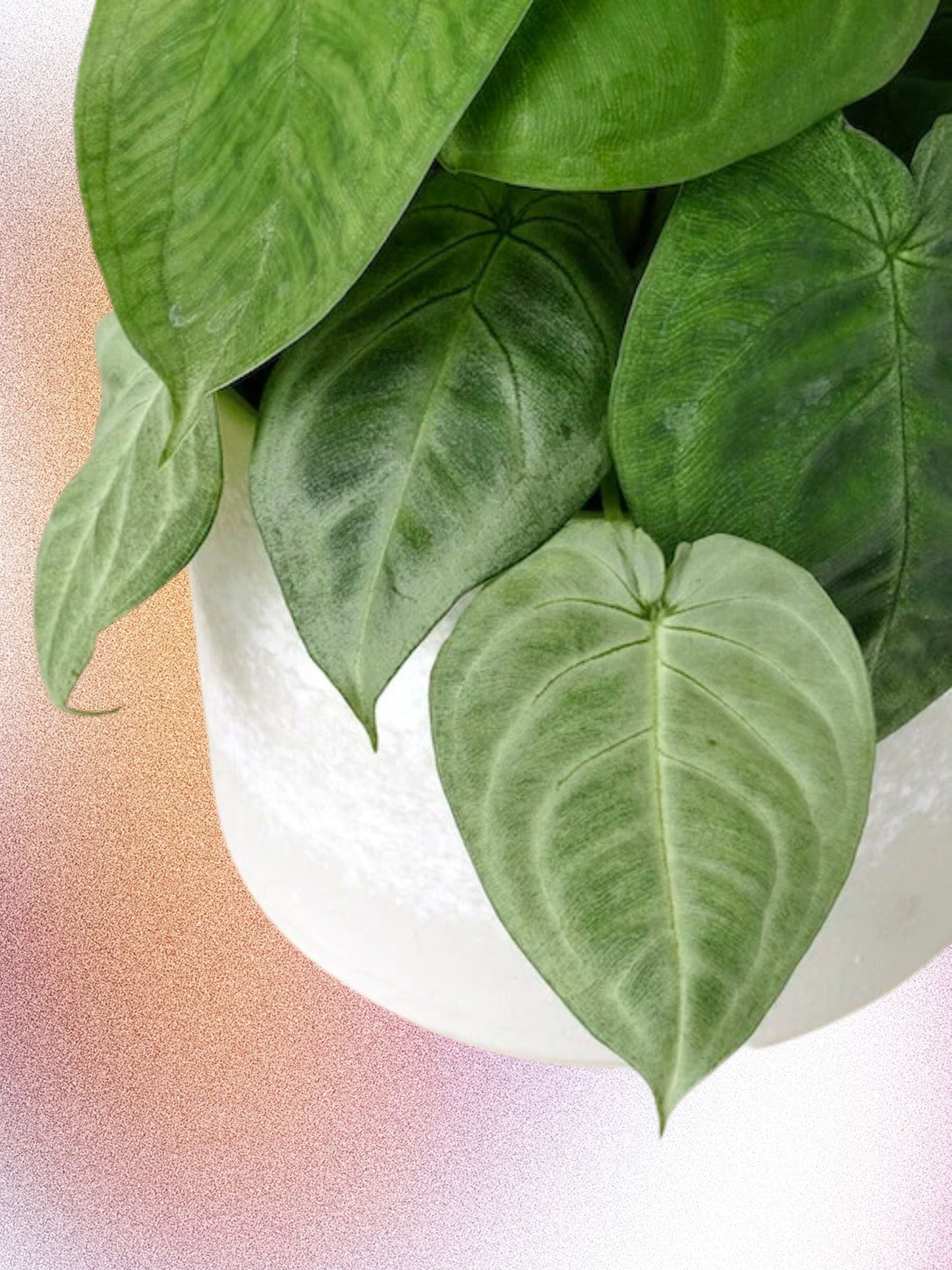
Syngonium macrophyllum 'Frosted Heart' is a unique cultivar known for its large, leathery leaves and frosty white pattern. This climbing syngonium will benefit from a moss pole of trellis.
Your Syngonium macrophyllum 'Frosted Heart' will ship in a plastic nursery pot in the size selected. Please remember that every plant is different and you will not receive the exact plant pictured. We do our best to ship plants as similar as possible to the ones pictured here.
We currently ship across Quebec and Ontario, Canada. We plan on expanding our shipping Canada-wide in the near future. Orders will be shipped via Canada Post unless otherwise noted.
Care guide
Syngonium macrophyllum 'Frosted Heart' likes consistently bright indirect light. Think of placing it near a south-facing window but make sure it never receives direct light which can cause Syngonium macrophyllum 'Frosted Heart' to burn.
Give Syngonium macrophyllum 'Frosted Heart' a full watering when the top 2" of soil is dry to your finger. Syngonium macrophyllum 'Frosted Heart' likes to be consistently moist but never waterlogged.
Like most Syngonium, Syngonium macrophyllum 'Frosted Heart' prefers higher humidity of around 60 to 80%. A humidifier may be necessary, otherwise Syngonium macrophyllum 'Frosted Heart' will be happy in a humidity cabinet or greenhouse. Check out our guide for increasing humidity for your houseplants.
During its active growing season (spring to early fall), fertilize Syngonium macrophyllum 'Frosted Heart' with a balanced, water-soluble houseplant fertilizer as instructed. Apply the solution to well-watered soil, avoiding foliage contact. Fertilize every 4-6 weeks, reducing or pausing in winter. Watch for signs of over-fertilization, adjusting the routine if needed.
Propagate Syngonium macrophyllum 'Frosted Heart' by stem cutting: take cutting from a healthy stem that includes a node and at least one leaf. Place the cutting in damp substrate or water, ensuring the node is covered. Remove the bottom leaves to prevent any from sitting under the surface. Replace the water weekly and or keep the substrate moist until the plant begins to root.





Climbing plants bring a natural beauty to both indoor and outdoor settings, enhancing aesthetics with their luxuriant foliage and elegant vines. When these climbing plants are supported by moss poles,...
Philodendron, Syngonium
Climbing plants bring a natural beauty to both indoor and outdoor settings, enhancing aesthetics with their luxuriant foliage and elegant vines. When these climbing plants are supported by moss poles,...
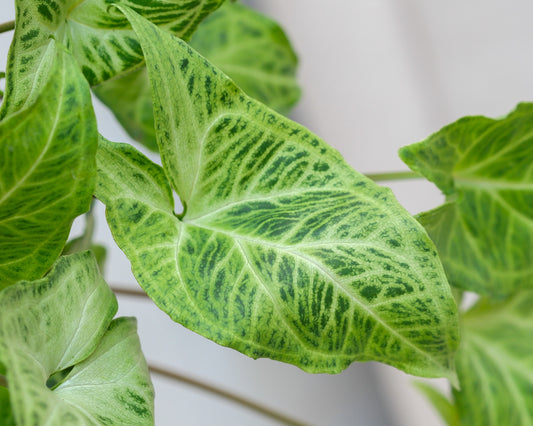
Learn why syngonium is a popular choice for indoor plants and how to care for them at home.
Syngonium
Learn why syngonium is a popular choice for indoor plants and how to care for them at home.

Houseplants bring life, beauty, and a touch of nature indoors, but like all living things, they require proper care and attention. One essential aspect of houseplant care is repotting. Repotting...
Potting
Houseplants bring life, beauty, and a touch of nature indoors, but like all living things, they require proper care and attention. One essential aspect of houseplant care is repotting. Repotting...
