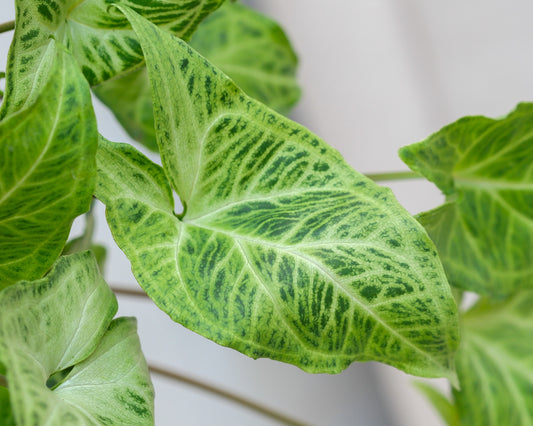
Commonly known as the Arrowhead Plant or Goosefoot Plant, syngonium is a popular choice for indoor plants due to its attractive foliage and relatively easy care requirements.
Light
- Syngonium prefers bright, indirect light. Avoid direct sunlight, especially intense afternoon sun, as it can scorch the leaves.
- If you notice your Syngonium's leaves becoming pale or losing their variegation, it might be getting too much light. On the other hand, if the leaves are dark green and the plant is leggy, it might not be getting enough light.
Watering
- Keep the soil consistently moist but not soggy. Water the plant when the top inch of the soil feels dry to the touch.
- During the growing season (spring and summer), you may need to water more frequently. In the dormant season (fall and winter), allow the soil to dry out a bit more between waterings.
- Always use a well-draining potting mix to prevent waterlogged roots.
Humidity
- Syngoniums appreciate higher humidity levels. You can increase humidity by misting the leaves, placing a tray of water near the plant, using a humidity tray, or using a humidifier.
- Brown leaf tips can be a sign of low humidity.
Temperature
- Syngonium prefers temperatures between 60°F to 75°F (15°C to 24°C).
- Avoid exposing the plant to drafts or sudden temperature fluctuations.
Fertilizing
- During the growing season (spring and summer), feed your Syngonium with a balanced, diluted liquid fertilizer every 4-6 weeks.
- Reduce or stop fertilizing in the dormant season.
Pruning and Training
- Prune your Syngonium to encourage bushier growth and remove any dead or yellowing leaves.
- You can train your Syngonium to climb or trail by providing a support, such as a moss pole or trellis, and gently tying the vines to it.
Potting and Repotting
- Repot your Syngonium every 1-2 years, typically in spring, or when you notice the plant becoming root-bound.
- Choose a slightly larger pot with good drainage and fresh potting mix.
Pests and Diseases
- Keep an eye out for common houseplant pests like spider mites, aphids, and mealybugs. Regularly inspect your plant for any signs of infestation. Read more about the signs of an aphid infestation on our aphid houseplant pest guide.
- If you notice any issues, isolate the plant and treat it with appropriate measures, such as insecticidal soap or neem oil.