

Everyday free shipping in Canada on orders over $99
We currently ship across Quebec and Ontario, Canada. We plan on expanding our shipping Canada-wide in the near future. Orders will be shipped via Canada Post unless otherwise noted.
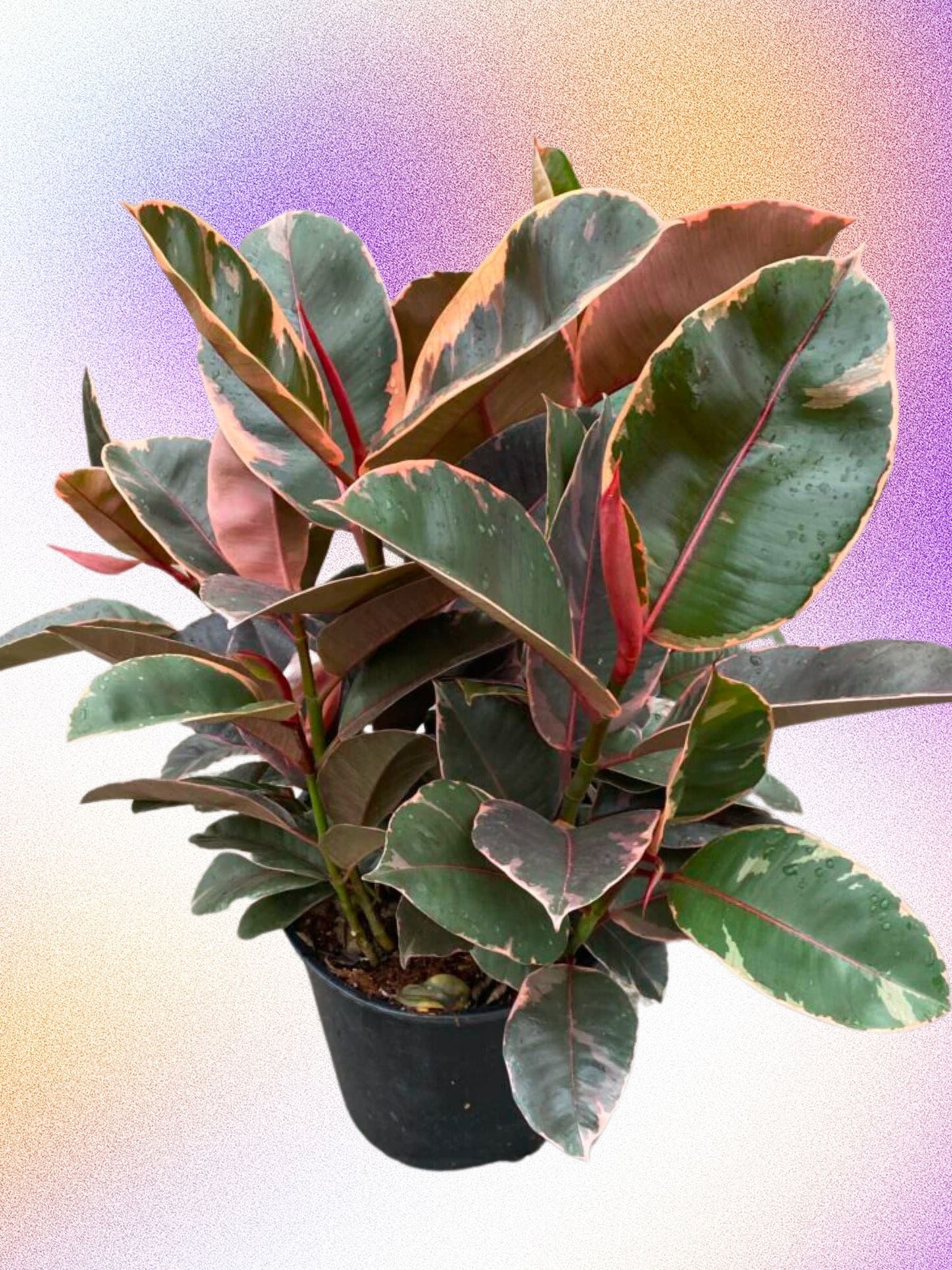
Your Ficus elastica 'Ruby' will ship in a plastic nursery pot in the size selected. Please remember that every plant is different and you will not receive the exact plant pictured. We do our best to ship plants as similar as possible to the ones pictured here.
We currently ship across Quebec and Ontario, Canada. We plan on expanding our shipping Canada-wide in the near future. Orders will be shipped via Canada Post unless otherwise noted.
Care guide
Ficus elastica 'Ruby' likes consistently bright indirect light. Think of placing it near a south-facing window but make sure it never receives direct light which can cause Ficus elastica 'Ruby' to burn.
Water Ficus elastica 'Ruby' when the top half of the soil is dry to your finger. Give Ficus elastica 'Ruby' a full soak until water drains out the bottom of the pot.
Ficus elastica 'Ruby' thrives in average household humidity between 40 and 60%. A humidifier may be required in the dryer winter months -- keep a lookout for crispy leaves.
During its active growing season (spring to early fall), fertilize Ficus elastica 'Ruby' with a balanced, water-soluble houseplant fertilizer as instructed. Apply the solution to well-watered soil, avoiding foliage contact. Fertilize every 4-6 weeks, reducing or pausing in winter. Watch for signs of over-fertilization, adjusting the routine if needed.
Remove a small piece of bark from a woody branch of your Ficus elastica 'Ruby'. Wipe the wound clean and cover with a moisture-retaining medium (such as moistened sphagnum moss) enclosed in plastic wrap. Ensure the medium is kept moist. Once roots develop, the rooted section can be separated and transplanted.




Houseplants bring life, beauty, and a touch of nature indoors, but like all living things, they require proper care and attention. One essential aspect of houseplant care is repotting. Repotting...
Potting
Houseplants bring life, beauty, and a touch of nature indoors, but like all living things, they require proper care and attention. One essential aspect of houseplant care is repotting. Repotting...
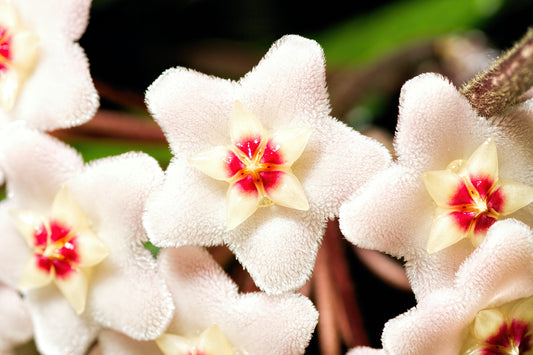
Hoya plants, also known as wax plants or porcelain flowers, are renowned for their stunning clusters of waxy, star-shaped blossoms and their ability to thrive indoors. These tropical plants can...
Hoya
Hoya plants, also known as wax plants or porcelain flowers, are renowned for their stunning clusters of waxy, star-shaped blossoms and their ability to thrive indoors. These tropical plants can...

Climbing plants bring a natural beauty to both indoor and outdoor settings, enhancing aesthetics with their luxuriant foliage and elegant vines. When these climbing plants are supported by moss poles,...
Philodendron, Syngonium
Climbing plants bring a natural beauty to both indoor and outdoor settings, enhancing aesthetics with their luxuriant foliage and elegant vines. When these climbing plants are supported by moss poles,...
